
The call came on an ordinary Monday morning. There hadn’t been a major storm, no dramatic weather event, and no obvious sign that anything was seriously wrong. Yet a facility manager noticed a small water stain spreading across a ceiling tile near the entrance of a commercial building. At first glance, it looked insignificant—something that could probably wait until the next maintenance visit. Fortunately, instead of postponing the issue, the property owner scheduled professional Commercial Roofing Repairs before the problem had a chance to grow.
That decision would ultimately prevent far more than a ceiling repair. It would protect insulation, preserve business operations, and extend the life of an entire commercial roofing system.
Many commercial roofing stories don’t begin with catastrophic damage. They begin with a small detail that someone chooses not to ignore.
“What appears to be a minor leak is often the first visible chapter of a much larger story taking place above the ceiling.”
The First Signs of Trouble
The building itself had performed reliably for years. Employees arrived every morning without giving the roof a second thought, customers came and went throughout the day, and daily operations continued exactly as expected. Like many commercial properties, the roof quietly did its job without attracting attention.
When the small ceiling stain appeared, there was every reason to believe the solution would be equally small. After all, there had been no major leaks, no standing water inside the building, and no reports of widespread damage. Still, experienced property managers understand that commercial roofs rarely reveal problems immediately.
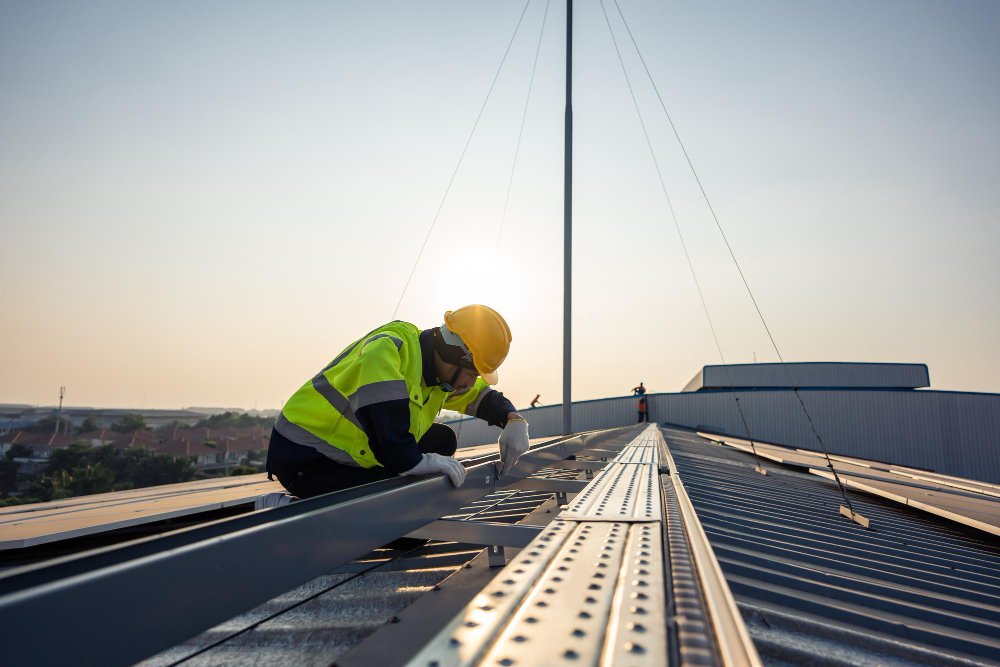
During the inspection, roofing professionals avoided making assumptions based solely on the interior water stain. Instead, they began examining the roof systematically, evaluating drainage pathways, flashing around rooftop equipment, membrane seams, roof penetrations, and other areas commonly affected by years of weather exposure.
What they discovered reflected a situation seen on countless commercial properties. The roofing membrane remained in generally good condition, but several supporting components had begun showing natural wear. Flashing near mechanical equipment had gradually deteriorated, sealants around penetrations had started losing flexibility, and one drainage area was no longer moving water as efficiently as originally designed.
None of these conditions alone required replacing the roof. Together, however, they created an opportunity for moisture to find its way beneath the roofing system.
The roof hadn’t suddenly failed. It had simply reached the point where years of dependable service deserved thoughtful attention.
Looking Beyond the Leak
One of the most valuable lessons in commercial roofing is that water rarely travels in a straight line. The ceiling stain marked the place where moisture became visible—not necessarily where it first entered the roofing system.
Instead of concentrating on the symptom alone, the inspection focused on understanding the complete story. Every section of flashing, every membrane transition, and every rooftop penetration was evaluated as part of a single integrated roofing system. That broader perspective revealed that several relatively small deficiencies had combined over time to create favorable conditions for water intrusion.
At this stage, it became clear that responding with a quick surface patch would provide only temporary relief. A successful repair would require addressing the causes behind the leak rather than simply covering the visible evidence.
“Commercial roofing is rarely about finding one damaged spot. It’s about understanding how every component works together to protect the building.”
The repair plan that followed reflected that philosophy. Instead of replacing large portions of the roof unnecessarily, the team prepared a targeted approach focused on restoring flashing integrity, improving drainage performance, resealing vulnerable penetrations, and reinforcing areas where natural aging had begun affecting waterproof performance.
Sometimes the most successful repair isn’t the largest project. It’s the one that understands the building well enough to intervene at exactly the right moment.
A Repair Strategy That Changed the Outcome
The repair work itself was carefully planned to minimize disruption to the businesses operating inside the building. Rather than rushing to replace large sections of the roofing system, the team focused on restoring the areas that had gradually become vulnerable over time.
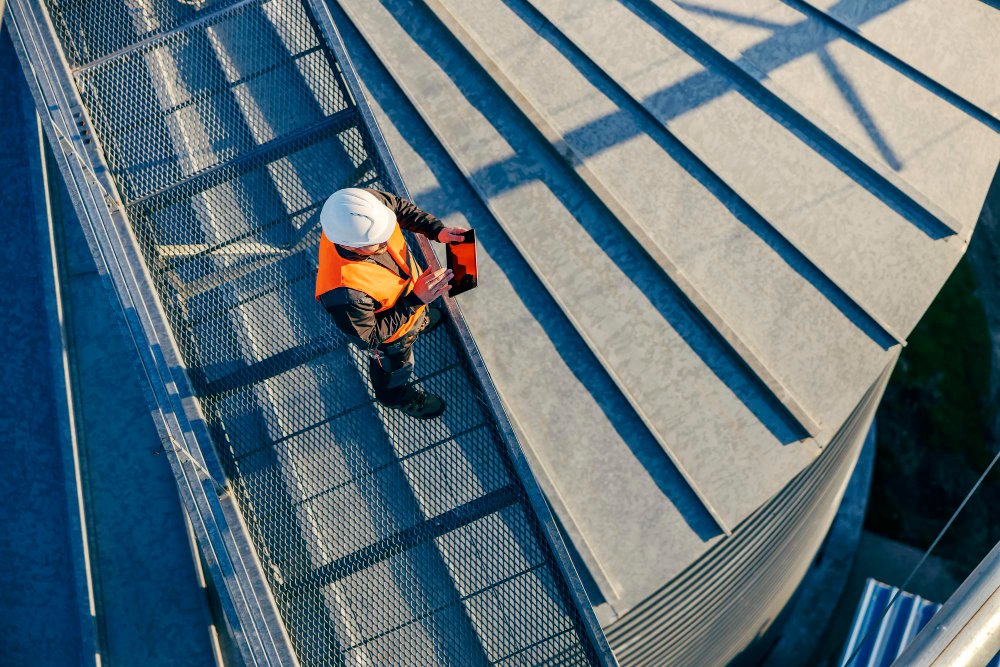
Damaged flashing was replaced where weather exposure had reduced its effectiveness. Roof penetrations surrounding mechanical equipment were professionally resealed to restore continuous waterproof protection. Drainage pathways were cleaned and evaluated to ensure rainwater could move freely across the roof surface instead of collecting in low areas. Each repair was completed with the goal of strengthening the entire roofing system rather than treating only the most visible symptom.
As the work progressed, the building owner began to see the value of a comprehensive repair strategy. The objective wasn’t simply stopping a leak—it was extending the service life of the existing roof while reducing the likelihood of future emergency repairs.
Equally important, the inspection uncovered several developing concerns that had not yet caused visible damage. Addressing those areas during the same project prevented them from becoming larger problems later, demonstrating why early intervention is often far more effective than waiting for additional signs of deterioration.
For property owners working with experienced Commercial Roof Repair Specialists, this kind of proactive approach often delivers the greatest long-term value. Careful inspections, thoughtful repairs, and preventive maintenance help preserve roofing systems that still have many productive years ahead of them.
The roof looked much the same when the work was complete. What had changed was its ability to continue protecting everything beneath it with renewed confidence.
“The most successful commercial roof repairs are often the ones nobody notices afterward—because the building simply continues operating exactly as it should.”
Lessons That Last Beyond the Project
Looking back, the project offered an important reminder that applies to nearly every commercial property. Roofing systems rarely fail without warning. More often, they provide subtle clues—small leaks, aging flashing, slower drainage, or isolated areas of wear—that invite attention long before major damage occurs.
Choosing to investigate those early warning signs changed the entire outcome. Instead of facing widespread moisture damage or an unexpected roof replacement, the property owner invested in targeted repairs that restored performance while preserving the existing roofing system.
The experience also reinforced another valuable lesson: commercial roofs should never be viewed as isolated construction elements. They are part of a complete building envelope that protects employees, customers, equipment, inventory, and the countless daily activities taking place below. Every repair contributes to that larger purpose.
Sometimes the greatest success isn’t avoiding every roofing problem. It’s recognizing the right moment to act before a manageable issue becomes a costly disruption.
Routine inspections, preventive maintenance, and timely repairs remain some of the most effective ways to maximize roof performance and extend service life. Buildings that receive consistent professional attention are far better positioned to avoid emergency repairs, unexpected downtime, and unnecessary replacement costs.
In the end, the story that began with a single ceiling stain became something much more meaningful. It became a reminder that thoughtful decisions, made at the right time, often have the greatest impact. The roof continued protecting the building, business operations continued without interruption, and the investment beneath that roof remained secure.